
FL Communications in Forbes Türkiye: Building trust abroad
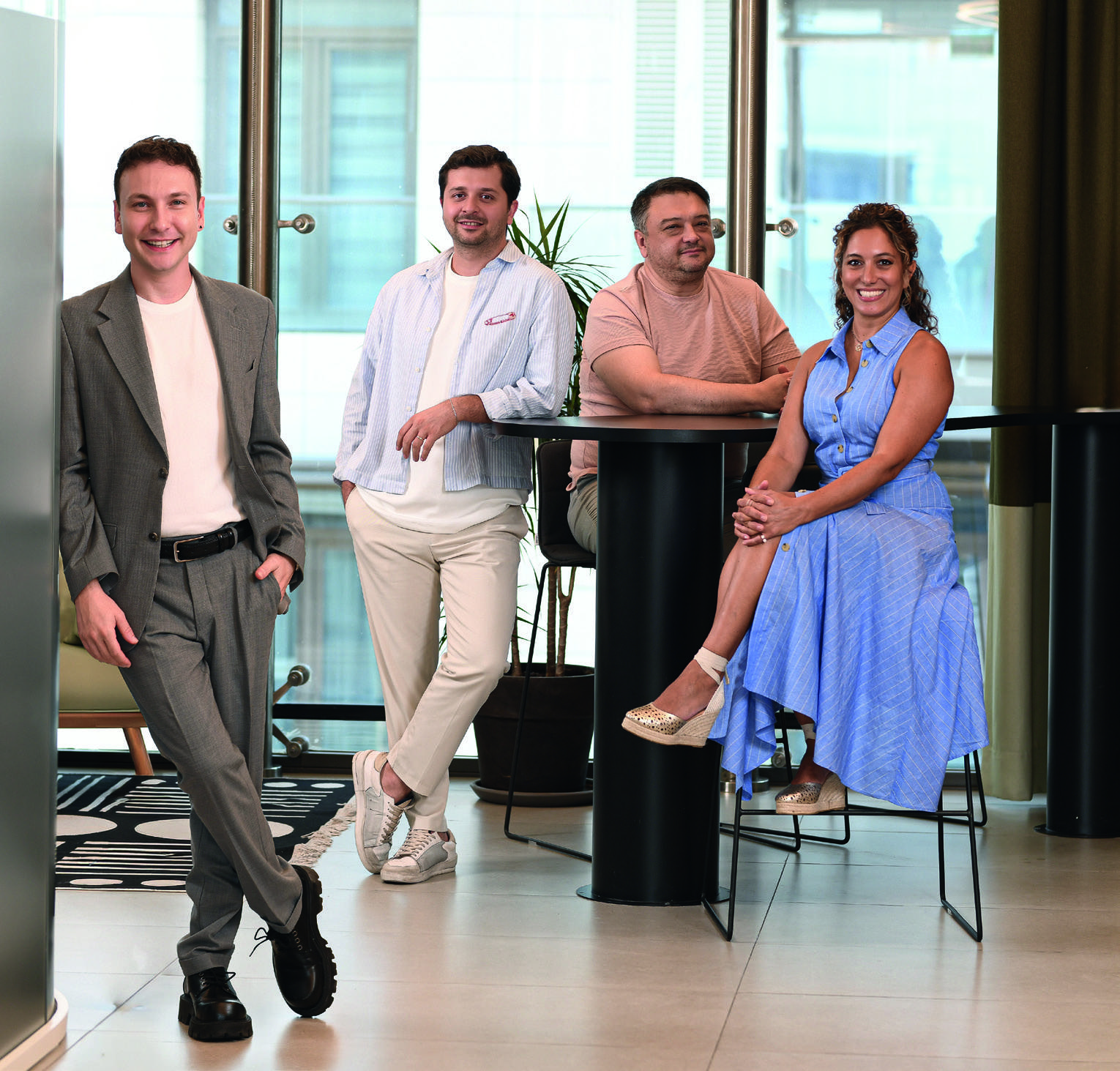
FL Communications founder Furkan Lüleci discusses the gap between international sales and international recognition in a September 2026 interview for Forbes Türkiye. Published under Forbes Stüdyo, the feature explores how Turkish companies can build a reputation in markets where their domestic success is still unfamiliar.
The interview, titled “Türk Markalarının Yeni Sınavı: Küresel İtibar” (“Turkish Brands’ New Test: Global Reputation”), draws on a situation Lüleci encounters across sectors: a business can be well established at home yet leave very little trace when a journalist or prospective partner researches it abroad. Commercial expansion and public recognition do not necessarily move at the same pace.
A reputation has to be earned in each market
A company's standing in Türkiye does not automatically follow it into another country. In the interview, Lüleci describes the different starting points of a journalist who has never heard of the business, a potential partner with little information about it, and a customer encountering its name in search results for the first time.
He argues that companies have often treated international growth primarily as a question of sales, investment and distribution, with communications coming later. His recommendation is to plan how the company will explain its expertise and relevance from the beginning of a market entry programme.
This is also the starting point for FL Communications’ global PR work: understanding who needs to know the company, which publications matter to them and what evidence will make its story credible.
A translated announcement is only a starting point
FL Communications approaches each market through its own media culture. Lüleci explains that the agency began in London and worked with different countries and publications from the outset; the Istanbul office followed as a continuation of that structure.
A story that attracts interest in Türkiye may not give a London journalist a reason to cover it. An economics reporter may need different evidence from a technology editor. Lüleci describes the agency's task as adapting how a story is told without changing the company behind it.
The practical question is why the intended audience should care. The brand's preferred message is part of the brief, but the publication's interests and the actual news value of the material also shape the work.
What happens after coverage matters
Lüleci looks beyond the number of published articles when assessing a PR programme. Reach and coverage volume still matter, but relevant coverage in respected specialist publications can be more useful than a large number of mentions.
Some of the outcomes he values take time to appear: a journalist calling again months later, or an established relationship proving useful during a crisis. These examples explain why an immediate coverage report cannot capture everything that has been built.
The interview places particular emphasis on familiarity and trust. A journalist who understands a company's expertise and returns to it for another story represents a different kind of result from a single mention.
Read the original magazine interview
The original Turkish interview pages are available below as a PDF. The supplied document contains the magazine spread, including photographs of Furkan Lüleci and the FL Communications team.
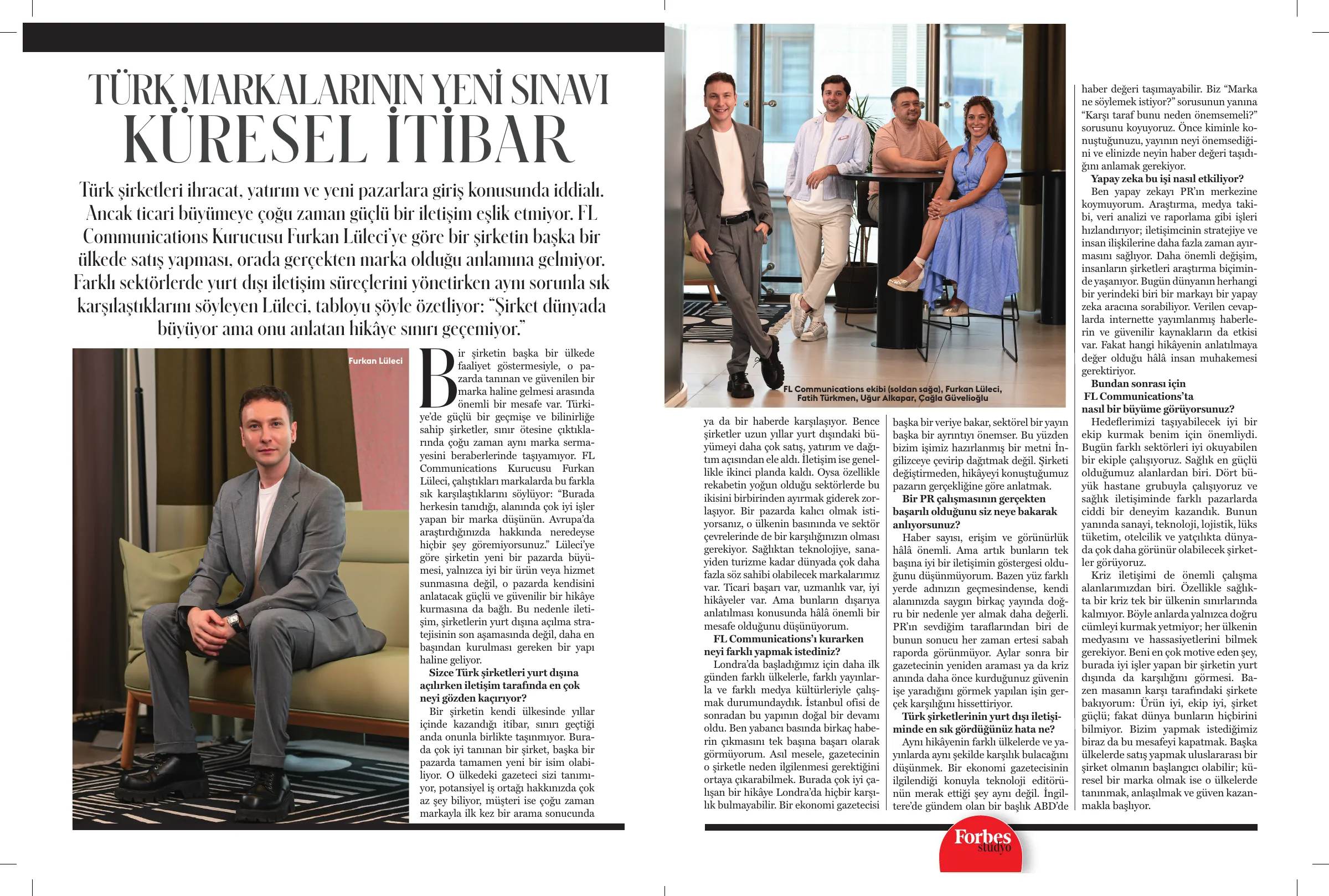
Open or download the original interview PDF in Turkish (1.5 MB)
Read the PDF on this page
If the PDF does not display, use the link above to open it in a new tab.
AI assists the work; people judge the story
FL Communications uses AI to assist research, media monitoring, analysis and reporting, according to Lüleci. He sees those tools as a way to give communications professionals more time for strategy and relationships.
He also points to a change in how people research businesses: a prospective customer or partner can ask an AI tool about a company. Published reporting and credible sources can influence the information available for those answers.
The connection between media relations and generative engine optimisation, or GEO, is part of that discussion. Lüleci nevertheless keeps human judgement at the centre of deciding whether a story is worth telling and how to approach a journalist.
Building on healthcare experience
FL Communications aims to develop its international work with a team that understands different industries. In the interview, Lüleci says the agency works with four major hospital groups and has gained experience in healthcare communications across markets.
He also sees international potential among Turkish companies in manufacturing, technology, logistics, luxury goods, hospitality and yachting. Crisis communications is another focus: he notes that a healthcare crisis may cross borders and require an understanding of several countries' media and sensitivities.
Lüleci ends the interview by returning to the distance between commercial strength and recognition. The work that motivates him is helping a company doing good work in Türkiye become understood and trusted by people elsewhere.