Message clarity
We preserve the substance of the expertise while giving each answer a structure the audience can grasp quickly.

Spokesperson and Executive Preparation
This is not acting tuition. It is practical preparation for turning expertise into an intelligible answer, staying composed through difficult questions and communicating with credibility under time pressure.
Strong on-camera performance is not about memorising polished lines. It is the ability to organise a thought, answer the question and remain natural under pressure. The film shows how recorded rehearsal, realistic questioning and specific feedback help a spokesperson find a delivery style they can genuinely own. Training improves preparedness; it cannot promise a particular editorial outcome.
Training can be delivered one-to-one or for a team. Scenarios are built around each participant’s role, sector and realistic media situations.
VIDEORecorded rehearsal turns feedback into something concrete
We preserve the substance of the expertise while giving each answer a structure the audience can grasp quickly.
The aim is not scripted perfection, but a delivery that still sounds like the person speaking.
Interrupted answers, follow-up questions, tight timings and sensitive topics are practised in realistic conditions.
APPROACH
An accurate answer is only part of a good interview. Time may be short, the question may arrive from an unexpected angle and a technically correct explanation may still leave the audience behind. Training focuses on prioritising the message, making it concrete and returning to the central point without sounding evasive.
Recorded rehearsal lets participants see what the audience sees. Pace, eye line, posture, filler language and answer structure are reviewed together. The goal is not a flawless performance. It is a reliable preparation habit that helps the spokesperson remain clear and consistent when the real conversation begins.
Preparation is not about memorising an answer; it is about protecting the structure of your thinking under pressure.

Trainer and feedbackOn-camera media trainer Furkan Lüleci

Selected organisations in our work context


VALUE
Participants practise responding to the actual question without losing the central message.
Voice, eye line and body language are adjusted to support the message without becoming performative.
The training covers honest boundaries, uncertainty and returning to the core issue without becoming defensive.
When several people may speak on the same subject, the key message framework becomes more consistent.
FROM THE WORK
Visibility is not the goal on its own. The message, context and responsibility need to come together in the spokesperson’s delivery.

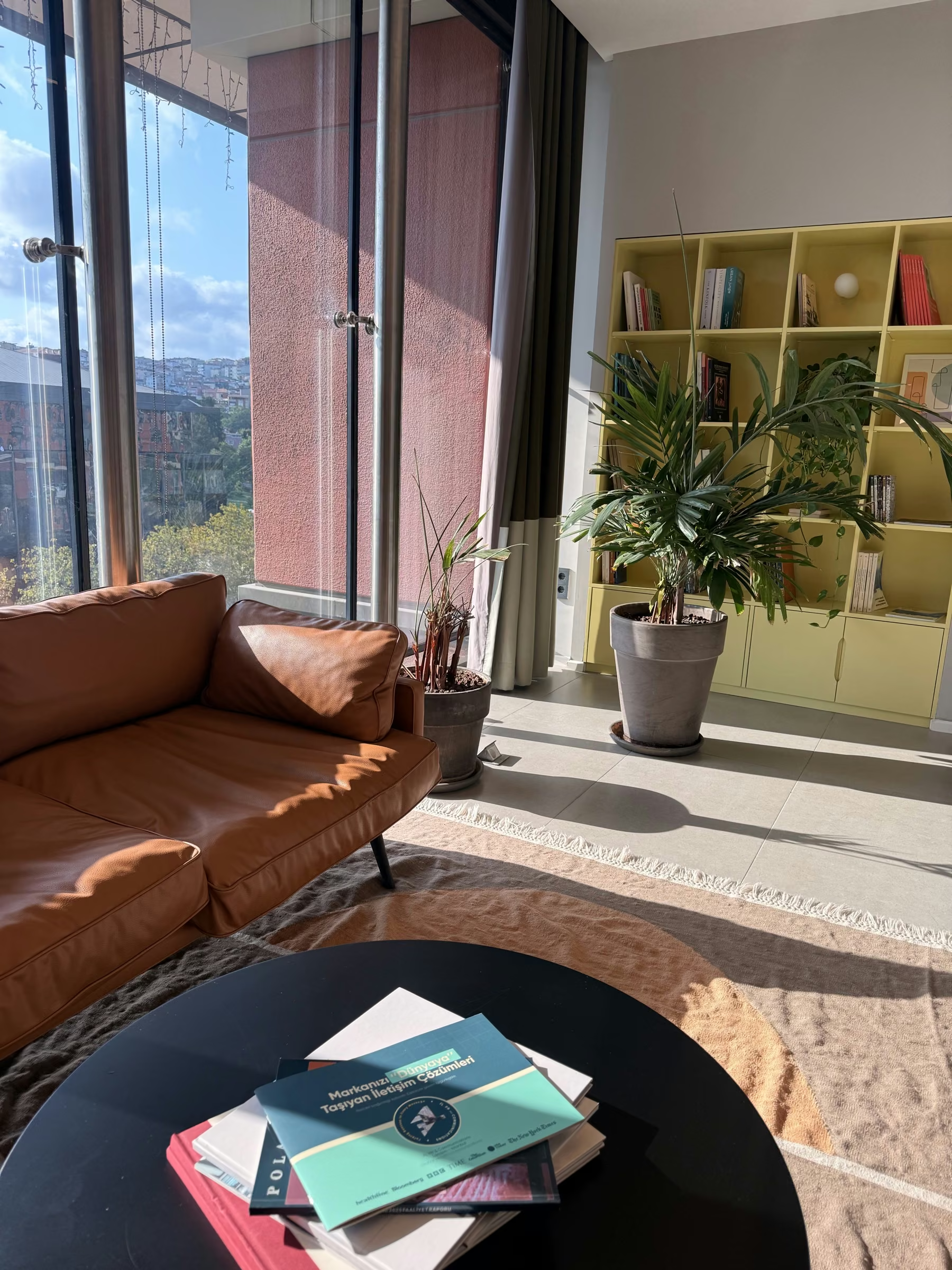
08Existing FL visual work used for media visibility and spokesperson preparation
WORKING MODEL
We review participant roles, the public agenda, sensitive issues, upcoming appearances and the purpose of the training.
Core messages, supporting evidence, useful examples and phrases requiring care are brought into a concise framework.
Participants respond to role-specific scenarios on camera, creating a practical baseline for review.
Follow-ups, interruptions, allegations, incomplete information and time pressure are worked through in a controlled setting.
Strengths, development points and useful rehearsal habits are summarised as specific next steps.
FROM THE WORK
Preparation is a practical sequence: build the message, test it with realistic questions and review the footage together.

02Communications presentation prepared for media training

03Practical media session with a camera operator

04Practical interview session using headphones and a microphone
SCOPE
Message and pace rehearsal for tight timings, immediate follow-ups and statements that cannot be re-recorded.
Clear, complete answers and an appropriate tone for conversations that may later be edited.
Maintaining a useful narrative over a longer format without drifting from the central point.
Message discipline and transitions in settings with several questioners or speakers.
Expressing uncertainty responsibly, avoiding unverified statements and framing organisational accountability with care.
Camera position, sound, connection risk, eye line and practical preparation for home or office interviews.
FROM THE WORK
These cases are not presented as training outcomes. They are related reading on how subject matter, spokesperson preparation and editorial context interact in healthcare communications.
WHO IT IS FOR
FREQUENTLY ASKED QUESTIONS
Duration depends on participant numbers, rehearsal intensity and the range of scenarios. One-to-one coaching and team training are structured differently; we recommend a format after the initial needs discussion.
No. Programmes can be built for executives, clinicians, technical specialists, project leaders and anyone formally representing the organisation.
Recording is a valuable part of feedback, but the method, retention period and access rules are agreed in advance. Footage is not shared externally without permission.
Yes. Scenarios may include allegations, follow-up pressure, incomplete information and sector-specific risks. Confidentiality arrangements are agreed before sensitive material is used.
Yes. Remote delivery works particularly well for one-to-one coaching and virtual interview preparation. In-person delivery may be better for larger teams or studio-intensive sessions.
We usually need the details of any upcoming appearance, the organisation’s key messages, sensitive subjects and participant roles. We select only the material required for a useful rehearsal.