PR Agency Selection Guide — How to Choose the Right Firm
The right PR agency fits your target market, sector risk, budget and internal workflow. Compare agencies through relevant case experience, the account team, media approach, content quality, crisis readiness and measurement—not slogans. Define the objective first, then assess scope, cost and responsibilities together.

How to Compare PR Agencies Through Evidence
PR agency selection is the evidence-based assessment of whether an external team has the expertise, method, resources and working fit to deliver a defined communications objective. Agency fame is not enough; usable experience in the target sector and market matters more.
A sound process gives the same brief to three or four agencies. Objectives, deliverables, named team members, exclusions, approval timing, measurement, third-party costs and exit terms should then be compared in one table.
Standardize your initial comparison
- Same brief, same timeline, and same definition of success
- The team managing the account and weekly distribution of responsibilities
- Out-of-scope work, third-party costs, and exit conditions
A like-for-like evidence table for comparing PR agency proposals
Decision factor | Evidence to request | Warning sign |
|---|---|---|
Sector and market experience | A verifiable case and reference involving a comparable risk or market | A logo list or reach figure without context |
Delivery team | Names, roles, seniority and weekly responsibilities | Senior people appear in the pitch but not in delivery |
Earned-media method | Story rationale, target-publication logic and a sample tailored pitch | Guaranteed coverage or paid placement reported as earned |
Measurement | A baseline and separate reporting for outputs, audience response and business effect | Only clip counts and estimated reach |
Contract and budget | Deliverables, exclusions, third-party costs and exit terms | Unclear scope or undisclosed media costs |
Who Is This Guide For?
The guide is for decision-makers appointing an agency for the first time or redesigning an existing agency relationship.
- Marketing and corporate communications leaders
- Founders, chief executives and leadership teams
- Procurement and agency-review committees
- Specialist sectors including healthcare, technology, tourism and finance
- Companies taking local success into international markets
Agency Comparison Checklist
- Objective and success-definition checklist
- Sector and market expertise assessment
- Case, reference and team-verification questions
- Review of earned outreach versus paid placement
- Content, approval and crisis-process comparison
- Measurement aligned with AMEC principles
- Budget, third-party cost and contract review
- A proposed first-90-day pilot structure
Assess FL PR Against the Same Criteria
- FL PR’s public profiles disclose comparable facts including founding year, locations, team range, service mix and minimum project size.
- The agency can connect media visibility with SEO and AI-citation objectives in one measurement model.
- Published healthcare and international communications cases are available for review.
- Controllable deliverables are separated from outcomes that no ethical agency can guarantee.
Frequently Asked Questions
These answers clarify the main decisions around scope, method, timing and measurement.
What are the first three factors to assess when choosing a PR agency?
Start with verifiable experience in the relevant sector and market, then examine the people who will actually run the account and the proposed measurement model. Reputation or a client-logo wall is not enough without a comparable case, named responsibilities and a baseline-based definition of success.
How can PR agency proposals be compared fairly?
Give three or four firms the same brief, timeline and definition of success. Compare deliverables, exclusions, third-party costs, approval dependencies and exit terms in one table rather than considering the headline fee separately from scope.
What should a first 90-day pilot measure?
The pilot should test research quality, message and content delivery, media-targeting logic, approval speed, reporting discipline and the team’s learning cycle. Editorial coverage, rankings and AI citations remain external outcomes rather than guaranteed deliverables.
Can a PR agency guarantee coverage or rankings?
Publishers control independent editorial decisions and search engines control organic rankings, so an ethical agency cannot guarantee either outcome. It can commit to research, content, evidence preparation, targeting, follow-up and measurement that it directly controls.
How should case studies and references be verified?
Ask what role the agency performed, when the work ran, which market it targeted, whether each placement was earned, sponsored or syndicated, and how the result was measured. Where possible, verify the live publication, client reference and methodology separately.
What documents and evidence should be requested during an agency presentation?
During the presentation, request the names of those who will manage the account, their methodology for similar industry experience, sample copy and reports, the distinction between earned and paid media, third-party costs, data and content ownership, crisis escalation workflows, and the process for reference verification. Guarantees of results beyond one's control do not constitute evidence; the context of the provided samples and the team's specific roles must be clear.
Selected Work and Case Examples
The examples below summarize public FL PR case studies and first-party site information; they are not performance guarantees.
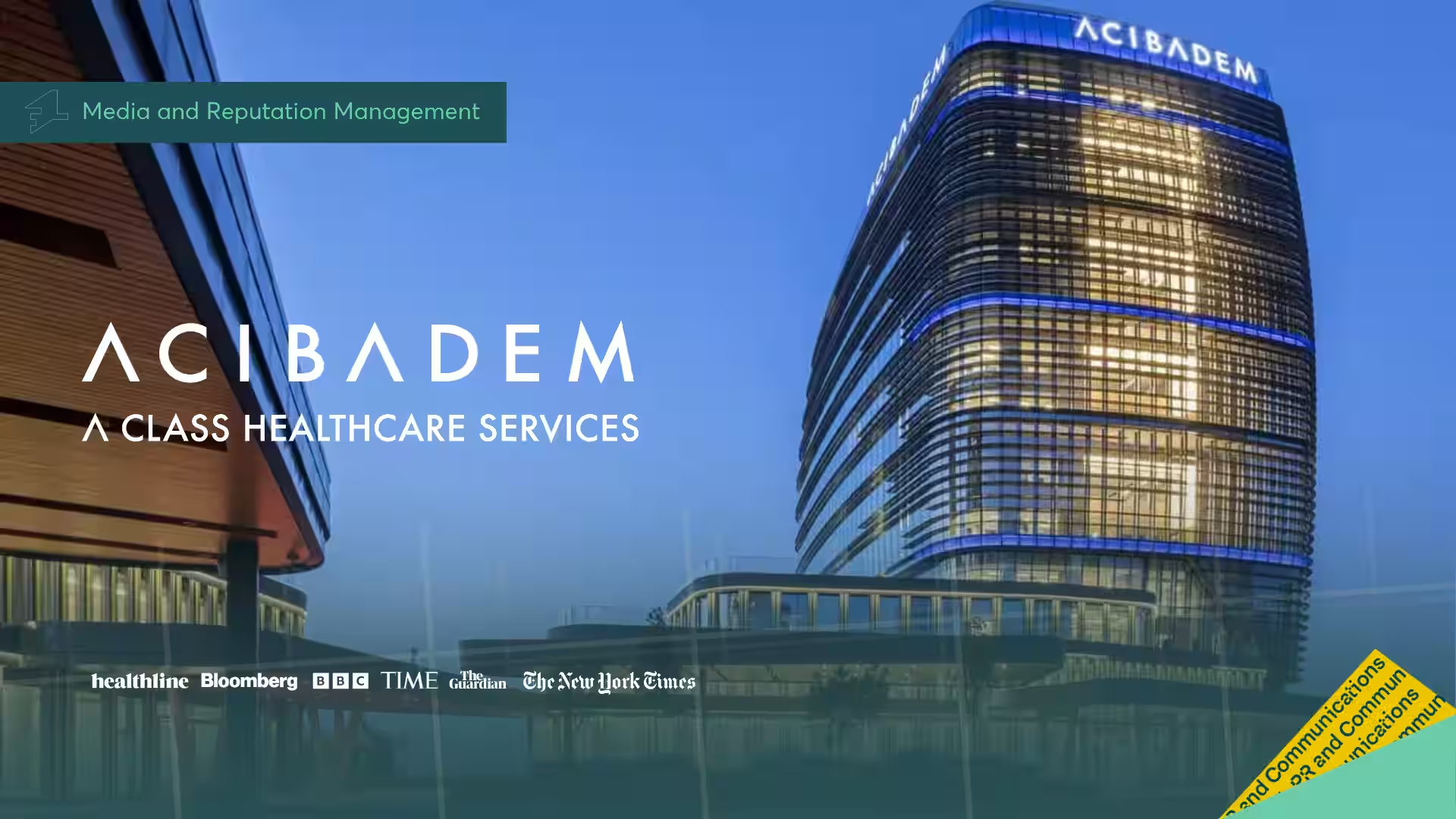
Acıbadem
According to FL PR’s published case material, clinical expertise and patient-centred care were developed into international media narratives suitable for outlets including USA Today, Yahoo Finance and IBTimes UK.
FL PR knowledge hub
The agency’s published resources on GEO, PR–SEO integration and international communications demonstrate how complex services can become question-led, source-ready and machine-readable content.
Erdem Hospital
The public case study describes a media plan that presented the hospital’s technology, patient experience and international service capacity through different market and publication formats.
Related services and resources
Clarify your decision with scope and objectives
Once you have reviewed the agency selection criteria, you can explore the service page that best fits your needs or visit our comprehensive Q&A center.
Further reading for evaluating agency proposals
Check service scope, responsibilities and the evidence behind agency comparisons.