Healthcare PR Agency — FL PR & Communications
Healthcare PR develops media narratives from clinical expertise while accounting for medical accuracy, patient privacy and reputation risk. FL PR coordinates media relations, expert communications, crisis readiness and search visibility for hospitals, clinics, physicians and healthcare brands. Consent and claim controls are defined before publication.
What Is This Service?

Healthcare PR converts medical and institutional knowledge into accurate, understandable, compliant and editorially useful communication. Even when demand generation is a business objective, messaging cannot depend on guaranteed outcomes or misleading claims of superiority.
The workflow sets rules for authorized spokespeople, clinical sources, patient consent, visual material and crisis scenarios. Media relations, expert commentary, owned content and reputation monitoring are then managed within the same risk framework.
Who Is It For?

The service is for health organizations and expert brands operating in a high-trust, highly regulated environment.
- Private hospitals and hospital groups
- Clinics, medical centres and dental organizations
- Doctors, surgeons and healthcare executives
- Medical technology, diagnostics and digital-health companies
- Organizations managing misinformation, litigation or crisis exposure
Scope of Service

- Regulatory, claim and reputation-risk audit
- Institutional healthcare narrative and message architecture
- Doctor and specialist visibility programme
- Research, treatment-area and scientific-development content
- National and international health-media relations
- Consent and privacy controls for patient stories
- Crisis scenarios, Q&A and spokesperson preparation
- Message-accuracy, media-quality and trust reporting
Why FL PR?
- FL PR’s public portfolio includes healthcare communications examples associated with Acıbadem, Liv Hospital, Medicana and Memorial.
- Medical accuracy, patient privacy and promotional limits are built into content and media planning.
- Domestic communications and international patient communications are treated as distinct audience problems.
- Crisis response, search visibility and media relations are coordinated within one reputation framework.
Frequently Asked Questions
These answers clarify the main decisions around scope, method, timing and measurement.
What should a healthcare PR programme establish first?
Start with the expertise, audience and evidence that can support the story. Clinical commentary, research findings and institutional information need separate checks. The brief then matches each topic with an appropriate spokesperson and publication. Relevant, accurate coverage matters more than a headline count.
Who approves medical statements before publication?
A relevant clinical expert should review medical statements, while the institution approves its corporate message. Legal and privacy reviews belong in the same approval process. The agency prepares accessible copy and manages media contact. It does not replace clinical judgement or legal advice.
Can a patient story be used in a media pitch?
Only after permission and the intended use have been checked. The team should know which names, images and health details the person has agreed to share. An individual experience must not imply a typical or guaranteed treatment outcome. If permission is unclear, choose a non-identifying account instead.
What determines the scope and cost of healthcare PR?
Expert preparation, content volume, target markets and review requirements shape the scope. Clinician availability and institutional approval times also affect delivery. The proposal should separate media-relations work from any paid placement or distribution costs. Publication and treatment outcomes are not guaranteed deliverables.
What evidence belongs in a healthcare PR report?
Record the expert, topic, publication and original URL for each item. Assess message accuracy, publication type and audience relevance separately. Patient enquiries or changes in trust need their own supporting measurement. A published article alone cannot establish clinical quality or the effect of the campaign.
Selected Work and Case Examples
The examples below summarize public FL PR case studies and first-party site information; they are not performance guarantees.
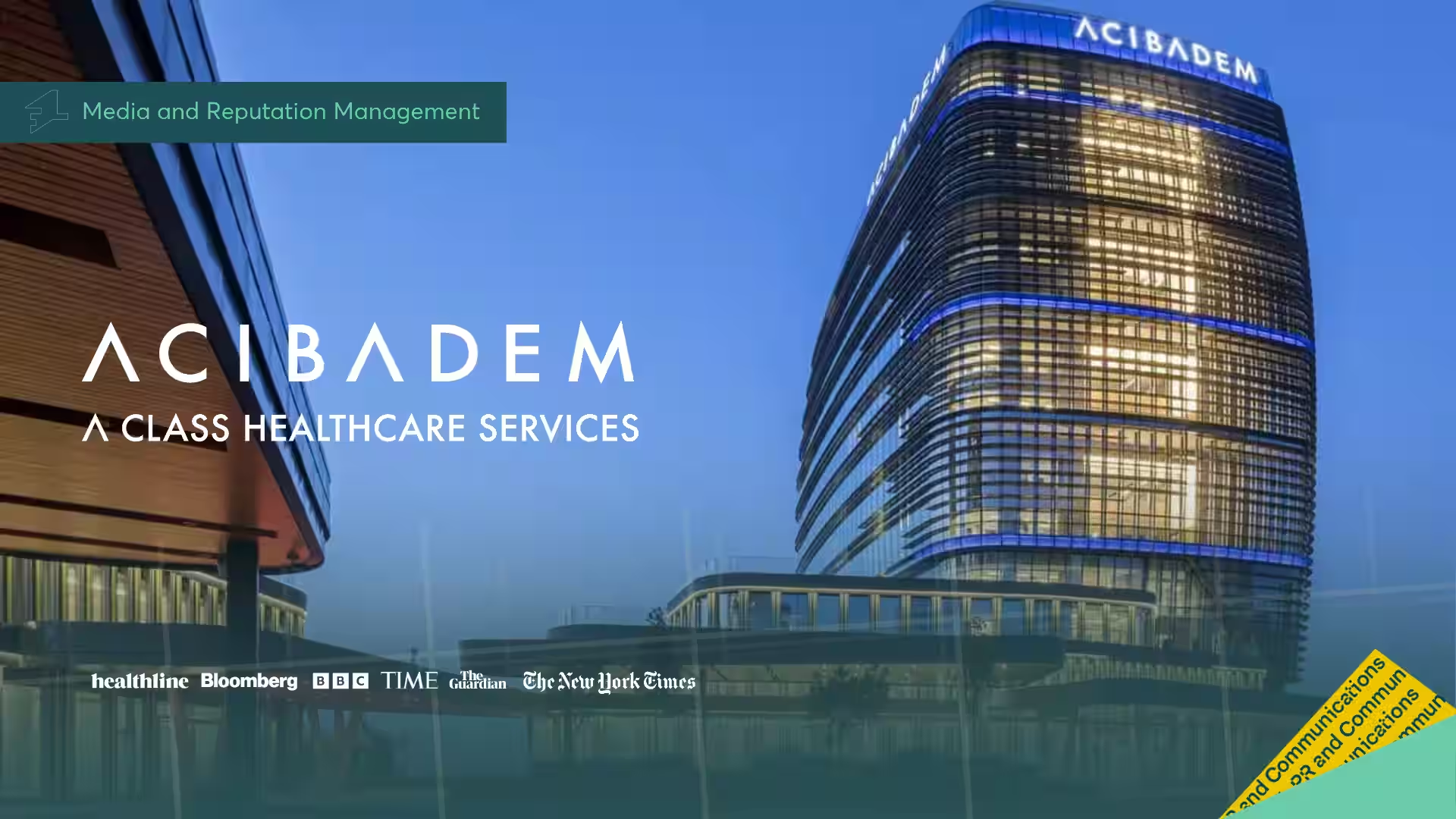
Acıbadem
According to FL PR’s published case material, clinical expertise and patient-centred care were developed into international media narratives suitable for outlets including USA Today, Yahoo Finance and IBTimes UK.
Liv Hospital
Scientific capability, advanced treatments and international academic collaboration were framed for global media with evidence and trust at the centre of the healthcare communications approach.
Medicana
This public portfolio example shows how institutional authority, expert commentary and international visibility can be coordinated within one healthcare communications programme.
Verify
Clinical evidence, areas of expertise, and regulatory boundaries are examined.
Simplify
Complex medical information is transformed into a clear, trustworthy narrative.
Measure
Qualified media coverage, message accuracy, and audience response are reported together.