Acibadem Earned Media Case Study: 42 Media Coverage Results


What was the earned media objective for Acibadem?
The objective was to turn the knowledge of Acibadem specialists into useful editorial material and earn coverage without buying media space. Rather than repeating a corporate message, the programme gave journalists timely, medically grounded answers to questions their audiences were already asking. This made expert commentary the product of the campaign: concise enough to use in a newsroom, careful enough for a health context and relevant to the story in front of the reporter.
Healthcare visibility is only credible when readers can understand why a source is qualified and what the source is actually explaining. Each opportunity was therefore assessed for public interest before a response was developed. The team identified the central reader question, matched it with the appropriate clinical specialty and prepared commentary with clear boundaries. The specialists did not diagnose an individual reader or promise an outcome; they explained warning signs, research context and sensible next steps.
The campaign was built around three practical objectives:
- position Acibadem specialists as dependable sources for international health reporting,
- create editorial relevance through timely and accessible explanations, and
- measure published pages and direct links separately so that volume did not obscure quality.
This focused earned media layer complements the wider story told in the Acibadem strategic communications case study, while concentrating on the evidence recorded in the October 2025 to January 2026 coverage dashboard.
How did specialist knowledge become an editorial story?
Specialist knowledge became an editorial story by combining a newsroom-ready question, the right medical source and an answer written for a general audience. The team followed seasonal behaviour, new research, social conversations and common symptom misconceptions rather than relying on a single corporate announcement. This produced several distinct news windows across the four-month reporting period.
For each opportunity, the process began with the reader promise: what would someone know after reading the article that they did not know before? Questions such as “When is this symptom more than a hangover?”, “How can a self-check fit into a normal routine?” and “Which digestive signs should not be dismissed?” provided a precise editorial frame. The specialist response then addressed that frame directly, without unnecessary medical language or promotional claims.
Delivery also mattered. A usable response included the specialist’s correct role, the limits of the comment, supporting context and availability for follow-up questions. Some stories appeared once; others were republished by several local titles within the same media network. The reporting model preserved every published URL as a coverage item but did not present those URLs as 42 unrelated pieces of original journalism.
Why did the programme use three public-interest themes?
The programme used three public-interest themes to show different areas of Acibadem expertise without forcing them into one generic brand narrative. Breast health, methanol poisoning and digestive health each answered a different audience need and created relevance at different moments in the news cycle.
Breast health and awareness
Breast health generated 21 coverage items, the largest part of the programme. The stories made specialist knowledge practical by connecting it with manageable health behaviours and the careful interpretation of new research. HuffPost UK used Professor Cihan Uras’s explanation of a three-minute breast check and linked directly to an Acibadem treatment page. Yahoo UK and several local publications adapted the subject for their own audiences.
Professor Metin Cakmakci was also quoted by Healthline as an independent expert commenting on research in which he was not involved. That article has been verified as live. It is presented here as additional editorial evidence, not as part of the 42 coverage items, because it did not appear in the supplied Looker Studio table.
Methanol poisoning and the “bad hangover” assumption
Methanol poisoning and hangover-related warnings generated 12 coverage items. The editorial idea explained how apparently familiar symptoms could mask a medical emergency and when someone should seek urgent help. Coverage from UNILAD and EU Reporter carried specialist guidance in a form that readers could act on without sensationalising the risk. The story worked because it addressed a clear safety question rather than using the news agenda as a pretext for a corporate mention.
Digestive health, food coma and travel
Digestive health and “food coma” angles produced 8 coverage items, while traveller’s diarrhoea produced 1 further result. End-of-year eating habits made digestive symptoms a timely editorial subject, but the specialist contribution helped distinguish ordinary discomfort from signs that should not be ignored. A Daily Mail article in the dashboard did not include an Acibadem link, while the UNILAD travel health article did. Treating those outcomes separately made the reporting more informative.
How were the earned media results measured?
The results were measured by tracking each published URL, publication label, referring domain strength and direct Acibadem link as separate fields. Across October 2025 to January 2026, the Looker Studio data recorded 42 coverage items, 34 publication labels and 30 unique domains. The average Domain Rating was 68 and the median was 73.
Domain Rating is a third-party SEO metric that describes the relative strength of a website’s backlink profile. It is not an audience figure and does not prove that an article was read, clicked or commercially effective. The case study therefore uses DR only to describe the relative link authority of the publishing environment. Of the 42 coverage items, 32 contained a direct link to Acibadem and 10 did not, giving a linked share of 76.2 per cent.
- 42 coverage items: the total number of published URLs, including original pieces and republications within media networks,
- 34 publication labels and 30 domains: two views of the diversity recorded in the report,
- average DR 68 and median DR 73: measures of the publishing domains’ relative backlink strength, and
- 32 direct links: links to the Acibadem homepage or relevant breast health and treatment pages.
The monthly pattern was 19 coverage items in October, 13 in November, 8 in December and 2 in January. That distribution shows that the work moved through several editorial windows rather than a single launch day. It should not, however, be interpreted as a simple month-on-month performance trend; the theme calendar, reporting cut-off and syndication pattern all affected the total.
Why were coverage volume and link value kept separate?
Coverage volume and link value were kept separate because an editorial mention and a direct digital reference are not the same outcome. An article can establish a specialist as a useful source even when it does not link to the institution. A smaller title may create a different benefit by linking readers to the precise treatment or health-information page that supports the comment.
The distinction was particularly important for republication. Several Reach PLC local titles and MSN pages carried versions of the same story. Those URLs demonstrated distribution and were retained in the coverage count, but they were not described as 42 separate journalist relationships or 42 original features. This avoids inflating the evidence while still showing how far an editorial idea travelled through publishing networks.
Destination pages were also reviewed. Fifteen linked results pointed to variants of the Acibadem homepage, 9 pointed to the breast cancer treatment page and 8 pointed to the breast health page. This shows a useful mix of corporate discovery and topic-level reference. For a healthcare organisation, the latter helps a reader move from a quoted specialist to a relevant source page where the institutional context can be checked.
What is the central result of the case study?
The central result is that healthcare expertise can earn both high-quality editorial visibility and measurable direct links when it is attached to a clear public-interest question. Instead of multiplying one press release, the programme paired different specialists with distinct moments in the health agenda. A substantial share of the coverage appeared on domains with strong DR values, and 32 published pages provided a direct route back to Acibadem.
The evidence also shows why “How many articles did we get?” is not enough as a reporting question. Teams need to look at how many domains were involved, whether coverage was original or syndicated, what role the expert played and whether the link destination matched the subject. The supplied data did not include reach, page views, clicks, patient enquiries or revenue. No claim about those outcomes has therefore been added to this case study.
For a broader view of the sector, see the health tourism global communications insights. Further institutional examples are covered in the global healthcare impact case study and the health tourism growth blueprint.
What can healthcare brands learn from this model?
Healthcare brands can learn that earned media needs a visible specialist, a defensible public-interest purpose and a transparent measurement model. Starting with the audience’s question is more likely to create editorial relevance than starting with the institution’s desired slogan.
- Start with a genuine news need. Seasonality, new research, a common misconception or an emerging behaviour can provide a natural reason for expert input.
- Match the specialist to the question, not only the topic. The best source is the person who can answer the story’s central question clearly and safely.
- Report coverage and links as different outputs. Both can be valuable, but they describe different effects.
- Make syndication visible. Count every live URL when reporting coverage items, while stating when several pages are republications of the same editorial story.
- Respect the limits of the evidence. If the report does not contain reach, clicks or business outcomes, do not turn those missing metrics into implied results.
This discipline protects the trust required in healthcare communications and produces a clearer management view of campaign performance. It also creates a clean base for future comparison: which expert, theme, publication type and destination page combination generated the most useful editorial and link outcomes?
Frequently Asked Questions
These answers clarify the scope and measurement method used in the Acibadem earned media case study.
Do 42 coverage items mean 42 unique news stories?
No. The total includes original pieces and URLs where the same story was republished by local titles or shared publishing networks. The accurate description is therefore 42 coverage items.
What is the difference between earned media and paid placement?
Earned media is published because an editor or journalist considers the subject, evidence or specialist useful to the story; the brand does not buy the space as advertising. The verified results in this case study are treated as earned media.
Why is Domain Rating included?
Domain Rating helps compare the relative backlink strength of publishing domains. It is not a measure of readership, visibility or commercial impact, and is used here only to describe the link environment.
Is the Healthline article part of the 42 reported items?
No. The Healthline article quoting Professor Metin Cakmakci as an independent expert was verified as live, but it was not present in the supplied Looker Studio table and was not added to the 42-item total.
Do these results prove patient enquiries or revenue growth?
No. The dashboard records coverage and link data; it does not provide patient enquiry, revenue, click or conversion figures. The case study makes no claim about those outcomes.
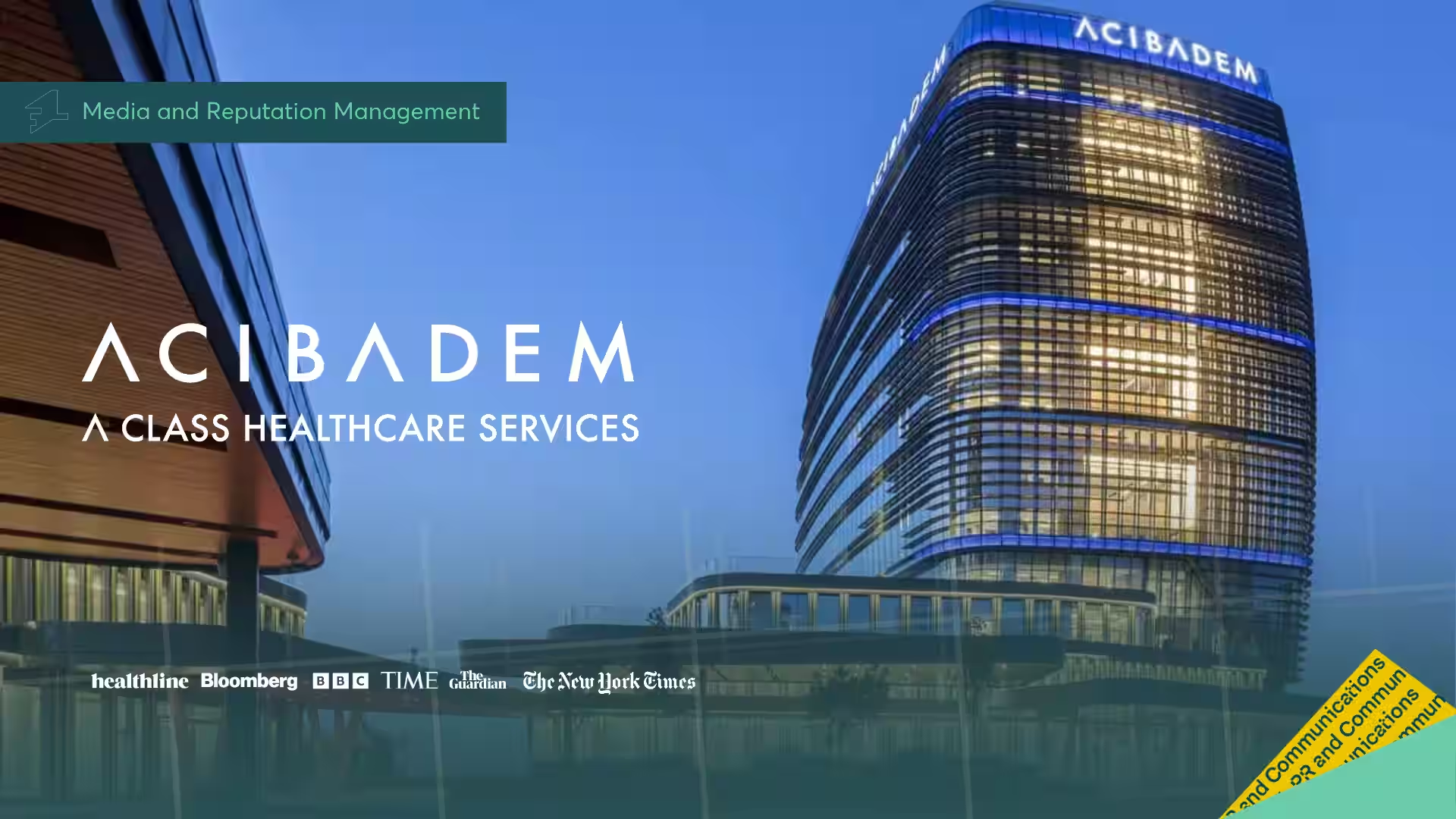

Participate in the World's Most Prestigious Publications and Platforms
Our clients earn visibility across respected publications and platforms worldwide. Each programme is planned around its target market, news value, placement type and measurement method. Outcomes vary by campaign scope and independent editorial decisions.









Discover Our Media Buying Services!
Clients we work with