
Using Traditional Motifs in Fashion: A Pre-Launch Review
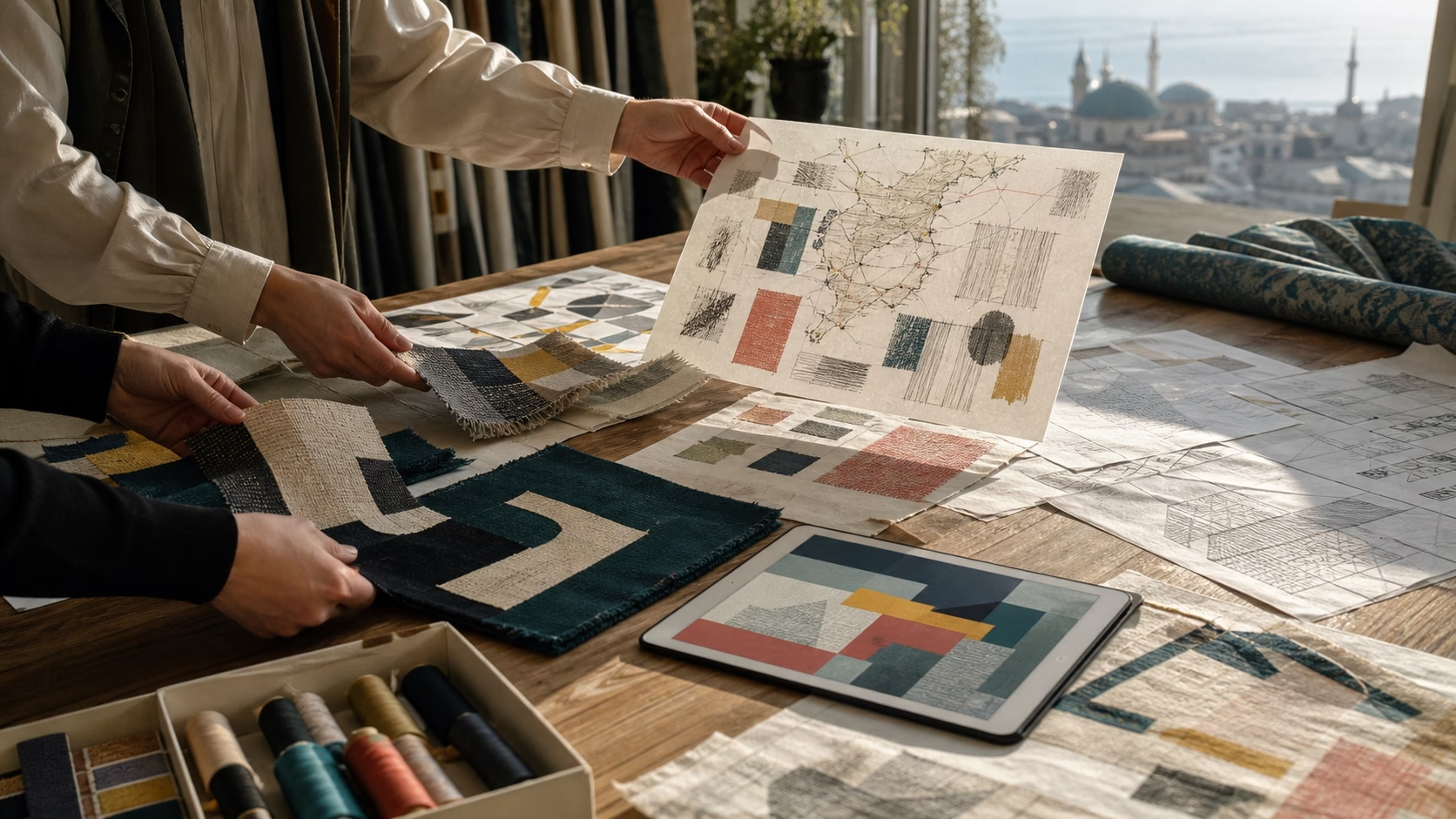

When is a fashion campaign using traditional motifs ready to launch?
A fashion campaign using traditional motifs is ready only when provenance, permission, maker participation, geographical indication rules, claim boundaries, visual context and correction ownership have all been approved.
A pattern in a museum catalogue, search result or family archive is not frictionless creative material. The World Intellectual Property Organization includes traditional textiles, garments, ornaments, symbols and designs within traditional cultural expressions. Its guidance on traditional cultural expressions in fashion warns that inappropriate or unconsented use can cause harm and offers project-specific steps; it is not a universal licence.
For an international launch, the communications question is therefore narrower than “Is this pattern beautiful?” The team needs to know which source was used, who has authority to speak about it, which rights attach to the source image or contemporary interpretation, whether a protected place-name is involved and how the people who maintain the practice participated. Words such as “authentic”, “ancestral”, “undiscovered” and “inspired by” are claims, not decorative copy.
In the United Kingdom, Google Trends' 30-day average relative-interest scores were 36 for “cultural appropriation”, 64 for “cultural heritage” and 0 for “traditional patterns”; the 12-month scores were 17, 77 and 6. The Google Trends UK comparison is a normalized index, not search volume. Audiences may meet the issue through heritage or appropriation language rather than a textile term.
What should a provenance record contain?
A provenance record should identify the evidence, people, place, date, contemporary adaptation and uncertainty behind every motif or craft story used in the campaign.
“Found in the archive” is not enough. Record the institution or owner, catalogue entry, date photographed, rights in the photograph, stated place of production, named maker if known and any later interpretation used by the design team. If two sources disagree, preserve that disagreement. A narrow sentence such as “adapted from a documented example held in this collection” is more credible than declaring a single origin the evidence cannot support.
Separate five layers:
- Historical object: What survives, where it is held and how it is described by the source.
- Living practice: Who makes, wears, teaches or transmits the technique today.
- Design intervention: What the fashion team changed in scale, colour, material, placement or meaning.
- Rights and permissions: Who approved the image, drawing, testimony, production knowledge and commercial use.
- Uncertainty: Which attribution, date or regional claim remains disputed or incomplete.
Türkiye's national record on weaving art and traditions describes motifs and knowledge as collective memory across multiple places and practitioner groups. It supplies context, not a licence for a photograph, contemporary pattern or product name.
When a collection is researched in Istanbul but narrated through another place, someone connected to the living practice should be able to challenge the draft. Their view does not replace legal review; its absence should stop claims about community meaning or approval.
How do permission, geographical indications and cultural context differ?
Permission, geographical indications and cultural context are separate gates: one governs a defined use, one protects a qualifying product name, and one tests what the use means to living people.
Permission may cover a source photograph, archive drawing, contemporary textile, personal story, location or production demonstration. The agreement should state channels, markets, term, editing, credit, payment and withdrawal or correction procedures. A maker who allows a studio visit has not necessarily approved a global advertising image. A museum's open-access object record may not confer the same terms on a new photograph or a modern reconstruction.
A geographical indication, or GI, is a different mechanism. It links a protected product name to origin and attributable qualities or reputation. TÜRKPATENT explains that handicrafts and industrial products can fall within Türkiye's GI system and distinguishes designation of origin from geographical indication according to the required link. A brand should review TÜRKPATENT's register and GI guidance, the applicable specification and producer conditions before using a place-based craft name.
The European Union's Regulation 2023/2411 has applied since 1 December 2025 to craft and industrial products including textiles, lace and jewellery. It requires origin, a quality, reputation or characteristic attributable to that origin, and at least one production step in the area. The official text of Regulation (EU) 2023/2411 should be checked with the live register. An EUIPO update reported 64 applications by 27 February 2026, many in textiles and ceramics. EUIPO's official system update provides the administrative context.
Cultural context asks what law may not settle: Is the symbol connected with mourning, marriage, belief, status or a restricted ceremony? Would styling change its meaning? Ask relevant practitioners; do not infer the answer from a mood board. This article is not legal advice; trade mark, copyright, design, contract and GI questions require qualified review in each market.
What does meaningful maker participation change?
Meaningful maker participation changes the campaign from an anonymous inspiration story into a documented collaboration with visible decision rights, payment and attribution choices.
A final interview is consultation, not co-decision. Ask where practitioners could change the design, name, copy, styling, market or timing. Record payment for research, design, production, licensing and appearances. Let people choose how they are named; credit does not replace compensation or permission.
UNESCO Türkiye's record for Antep İşi Nakışı notes its 2025 inscription and the role of women practitioners, local identity and intergenerational transmission. A fashion label could not accurately reduce this to “a UNESCO-approved pattern”. It would need to explain the actual practice, the participating makers, the relationship between the product and the inscription, and what UNESCO recognition does and does not mean.
Evidence box: FL PR & Communications' fashion, digital visibility and cultural transformation case narrative shows how a designer story can be positioned for a cross-border fashion audience. The original publisher page, however, labels the piece as contributor content produced without newsroom involvement. We therefore use it as a verified signal about narrative framing and format disclosure, not as evidence of earned editorial coverage.
A press release, sponsored placement, contributor article and independent newsroom story require different evidence, so the campaign report should preserve those labels. FL's official Instagram account also maintains a public “Kültürel Kodlar” Highlight. The official FL PR & Communications Instagram profile was used only for that verified profile-level signal; inaccessible story content was not reconstructed.
How should copy and visuals be tested together?
Copy and visuals should be tested as one meaning system, because a careful caption cannot repair a misleading costume, location, prop, soundtrack or crop.
Underline every origin, age, uniqueness, ownership and continuity claim. “Ancient”, “pure”, “forgotten”, “ours”, “revived” and “discovered” need direct evidence and an approver. If one workshop participated, do not speak for an entire city or community.
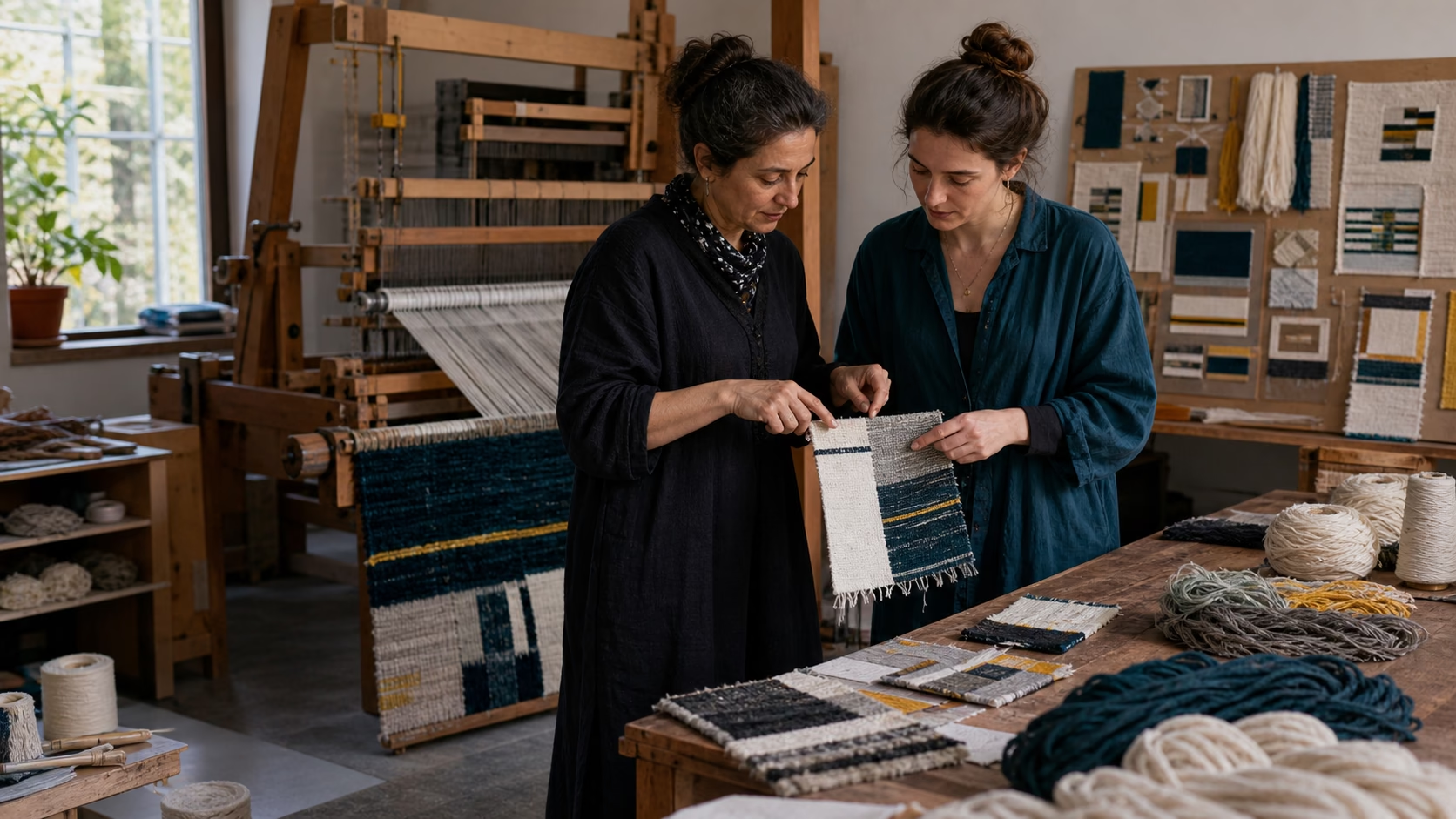
Then examine the whole frame. Is a practitioner reduced to anonymous hands? Does a domestic or sacred space become an exotic backdrop? Could jewellery, music or a ceremonial object introduce a restricted meaning? Review motion, thumbnails and crops separately.
Use a documented review rather than a general “sensitivity check”:
- Claim review: Direct source for every date, place, technique, title and “first”, “only” or “authentic” assertion.
- Name review: Correct spelling and authorized use of maker, community, GI and place names.
- Frame review: How practitioners read the model, posture, setting, objects, music and edit.
- Market review: Legal status and likely interpretation in Türkiye, the launch market and distributor territories.
- Format review: Clear separation of advertising, sponsored distribution, contributor content and earned editorial coverage.
A context-led media relations process also changes the outreach list. A heritage-based fashion story may require questions from craft, culture, rights and market specialists as well as fashion editors. Prepare a source note and spokesperson answer for each group instead of distributing the same romantic origin paragraph to everyone.
How does a seven-gate pre-launch review work?
A seven-gate pre-launch review gives each evidence owner a dated decision and prevents one executive approval from concealing unresolved rights or relationship risks.
Each gate ends in “approved”, “revision required” or “do not publish”, with a linked source, approver and date. The same record must govern commerce, press, advertising, social and distributor translations.
- Provenance gate: Sources, contemporary adaptation and material uncertainty are recorded.
- Rights gate: The scope of permissions for design, image, testimony, location and knowledge is verified.
- GI gate: Registrations, specifications, producer eligibility and market rules are checked.
- Participation gate: Maker decision rights, compensation and attribution preferences are documented.
- Claims gate: Press, commerce, advertising and social copy stay within the same evidence boundary.
- Visual gate: Styling, objects, sound, crops and translations are tested with practitioner and market perspectives.
- Correction gate: A contact route, response time, stop authority and multilingual correction owner are live.
Exporting one English master paragraph to every market is not localization. International media visibility for Turkish companies and Turquality-focused global communications planning both underline the need to align evidence, market context and media expectations. The Turkish and English campaign narratives should rely on the same permission record while answering different audience questions in native language.
What should happen in the first 24 hours after an objection?
In the first 24 hours after an objection, pause the relevant distribution, preserve the source and approval record, contact affected practitioners and assign one owner for the next public update.
Do not measure seriousness by reach alone. Assess whether the challenge could be correct, whether sales continue the disputed use, whether people face harm and whether the claim has spread into media or distributor materials. Freeze the dependent product page, paid creative, press kit and reseller copy while the record is reviewed.
The first note can identify the use under review, what has paused, who is being contacted and when the next update will come. “We were misunderstood” does not answer a provenance question. If the claim is wrong, correct every language and channel and document any remedy agreed with makers.
Measure the system, not only sentiment. Useful indicators include unsupported claims found before launch, missing permissions closed, maker-requested revisions accepted, market translations corrected, time to first meaningful response and time to complete a correction across all channels. These measures turn cultural care from a last-minute reputation exercise into a visible part of fashion production and communications governance.
Frequently Asked Questions
These answers address four recurring decisions for fashion teams using traditional motifs, craft names and maker stories.
Can an old motif be used freely if copyright has expired?
Not automatically. Copyright in an old motif may have expired while rights remain in an archive photograph, contemporary drawing, trade mark, testimony or contract. A GI, restricted cultural meaning or current maker relationship may also require separate review. Record the source and living-practice context before use.
Does UNESCO inscription grant commercial permission?
No. Inscription recognizes a defined living-heritage element; it does not issue a brand licence or create one owner for every related motif. Permission for the image, name, technique, testimony and market use must be established separately with the relevant people and rights holders.
Can a geographical indication be used in campaign copy?
Review the live registration and specification first. Confirm product origin, required production steps, producer eligibility, exact protected name and rules in each target market. A product that merely resembles a regional pattern does not acquire the right to use a protected craft name.
What is the first response to a cultural appropriation complaint?
Pause the disputed distribution and open the provenance, permission, participation and payment record. Do not dismiss the complainant or publish an unverified defence. State the scope of the review, who is being contacted and when the next update will be issued.