AI SEO Agency — FL PR & Communications
AI SEO focuses on the technical and editorial foundations that make a website accessible and understandable to search systems. FL PR reviews initial HTML, canonical URLs, language relationships and structured data. The delivery plan assigns priorities, implementation owners and live acceptance tests. A completed technical fix is distinct from an AI citation.
What Is This Service?

This service turns website access and content issues into an implementation plan. It reviews canonical URLs, language relationships and structured data alongside visible content. For ongoing analysis of brand mentions and the sources selected in generative answers, the GEO programme provides a separate measurement layer.
An engagement reviews bot access, indexability, internal links, page structure, entity markup, service definitions and topic gaps. Direct answers, original evidence, expert commentary, comparisons and FAQs are then developed, while a stable query set is monitored across generative engines.
Who Is It For?

The service suits B2B and high-consideration service brands whose buyers use AI assistants during research and shortlisting.
- Companies visible in organic search but missing from AI-generated answers
- Agencies, consultancies, technology and financial-services brands
- Hospitals, clinics and health-tourism organizations
- Companies building multilingual content and international demand
- Teams that need repeatable citation, competitor and topic measurement
Scope of Service

- AI crawler, robots.txt and indexability audit
- Topic, entity, query and content-gap analysis
- Service, comparison, guide and FAQ information architecture
- Organization, Service, Article and FAQPage structured data
- Internal-link, canonical and hreflang planning
- Source-backed expert content and digital PR
- ChatGPT, Perplexity and Google AI query tracking
- Citation share, coverage, source-page and competitor reporting
Why FL PR?
- FL PR uses topic-, page- and competitor-level AI visibility monitoring on its own domain.
- Its PR practice brings technical search work and editorial trust into the same programme.
- Content is built from verifiable company information and genuine expertise, without keyword stuffing or machine-made repetition.
- Recommendations are anchored in Google’s published generative-search guidance and current crawler policies.
Frequently Asked Questions
These answers clarify the main decisions around scope, method, timing and measurement.
What is the first deliverable in an AI SEO engagement?
The first deliverable is an actionable issue list for priority pages. It covers crawl access, index status, canonical URLs, language relationships and content in the initial HTML. Each issue needs an owner, proposed correction and acceptance test. This turns an audit into an implementation brief.
How is AI SEO different from the GEO programme?
AI SEO improves the site’s technical and editorial foundations. The GEO programme examines how generative answers describe the organisation and which sources they select. The work can run together, but the evidence differs. Completing a technical fix is not proof that an AI system has cited the page.
What does the development team need to handle?
Developers apply approved technical changes to the site’s source structure. The agency defines priorities and acceptance tests, then checks the live result. The organisation verifies content and author information. A proposal should clearly assign responsibility for code, CMS changes and publication rather than assuming access or ownership.
What determines the scope of AI SEO work?
Page and template counts, languages, CMS access and the type of technical issues determine the scope. Audit, implementation, editorial changes and live verification are separate deliverables. A report-only assignment is different from an implementation engagement. Maintenance and retesting frequency should also be agreed before work starts.
How are technical fixes separated from search outcomes?
A technical fix passes when the agreed live-page test confirms that the defect is resolved. Search impressions and clicks are tracked separately in Search Console. AI mentions and citations need a separate question-based record. None of these measures should be substituted for another or presented as an indexing guarantee.
Selected Work and Case Examples
The examples below summarize public FL PR case studies and first-party site information; they are not performance guarantees.
FL PR AEO measurement system
The agency monitors its own domain across ChatGPT, Perplexity and Google AI experiences at topic, page, citation and competitor level, turning observed search questions into a prioritized content backlog.
FL PR knowledge hub
The agency’s published resources on GEO, PR–SEO integration and international communications demonstrate how complex services can become question-led, source-ready and machine-readable content.
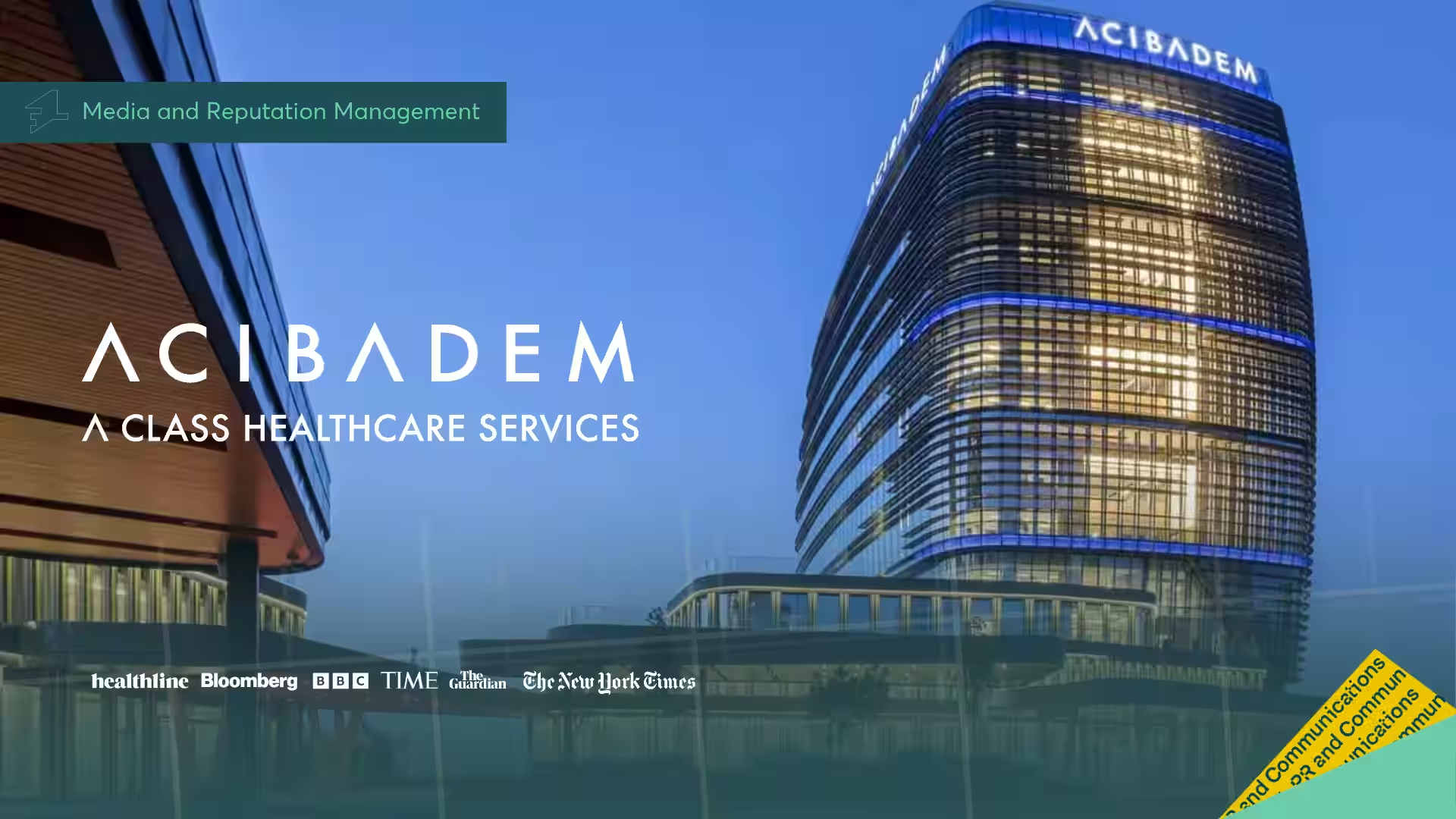
Acıbadem
According to FL PR’s published case material, clinical expertise and patient-centred care were developed into international media narratives suitable for outlets including USA Today, Yahoo Finance and IBTimes UK.
Fix the foundation
Crawling, indexing, schema, and content architecture issues are prioritized.
Establish authority
Topic clusters, expert evidence, and consistent corporate information are developed.
Measure visibility
Ranking, organic traffic, citations, and brand response accuracy are tracked together.