
Longevity Communications: Global PR and Trust Strategies for Health Brands
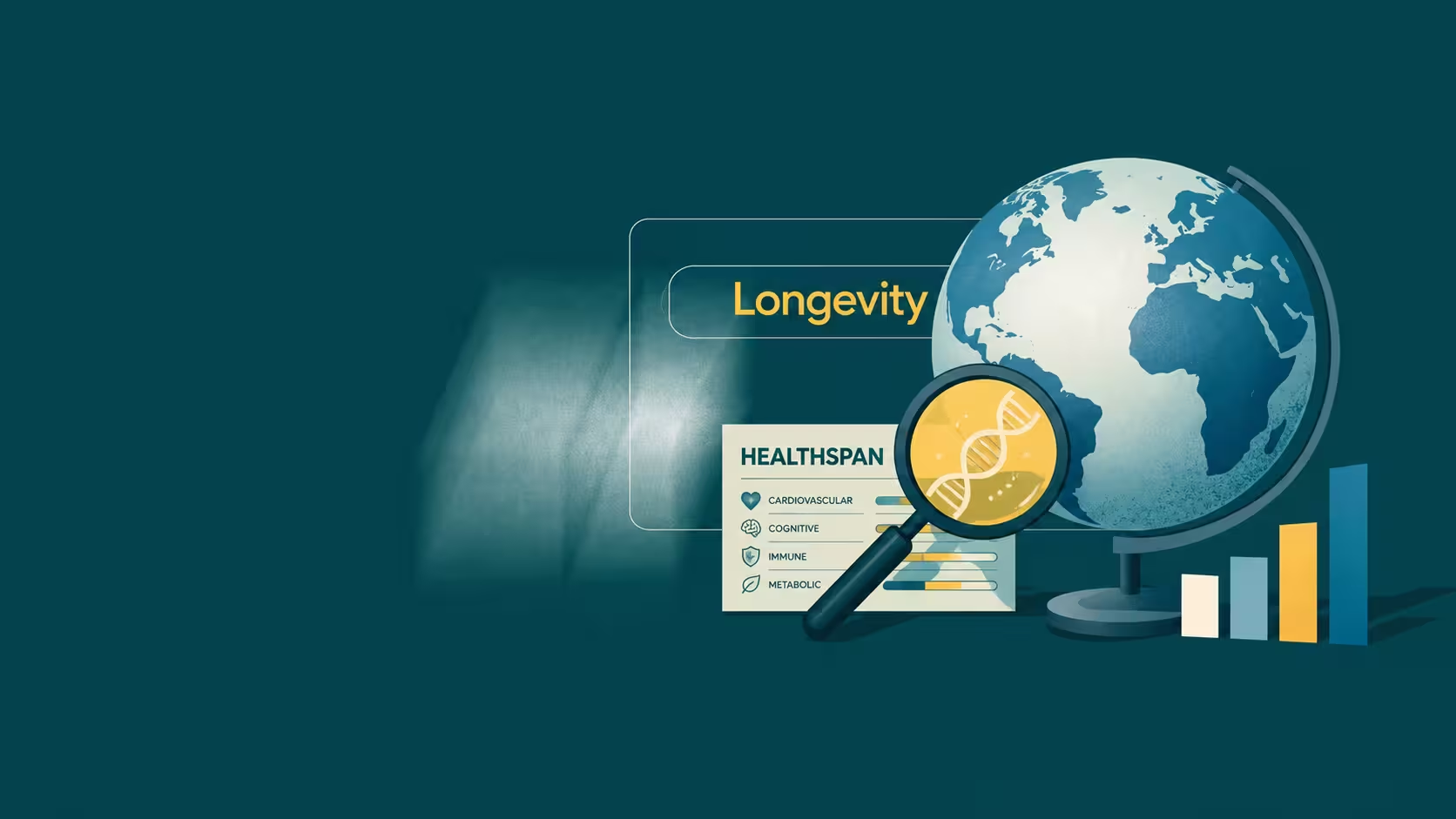

Longevity Communication: The New Global Competitive Arena for Healthcare Brands
Competition in the healthcare sector is no longer measured solely by the quality of treatment. Patients, investors, and international media are now looking at which institutions produce more reliable information, how they position their experts, and how they articulate their vision for healthy living. For many years, communication strategies were shaped around high-tech equipment, successful surgeries, and expert medical staff. Today, the picture is changing. People are not just looking for an institution to treat their illnesses; they are searching for healthcare brands they can trust for a longer, healthier, and higher-quality life.
At the heart of this shift lies a concept we have been hearing more and more in recent years: longevity .
In its simplest definition, longevity refers to a holistic approach that aims to increase the number of years spent in good health, rather than just extending the lifespan. Preventive health practices, personalized medicine, nutrition, metabolic health, sleep, exercise, biological age analysis, and lifestyle management are among the core components of this approach.
With the World Health Organization's (WHO) "Healthy Ageing" approach, healthy aging has become a key topic in global health policies. During the same period, many institutions—from biotechnology companies and academic research centers to private hospitals and health-tech startups—have begun to increase their investments in longevity.
This transformation is reshaping not only healthcare services but also the language of health communication and how brands position themselves internationally.
International patients no longer ask only, "Where can I get the best surgery?" In addition,
- Which institution is strong in preventive health?
- Which expert is cited as a reference on an international scale?
- In which publications do their scientific studies appear?
- How well does their healthcare approach align with current research?
have also become essential parts of the decision-making process.
This is precisely where longevity ceases to be just a new service category for the healthcare sector. It is transforming into a new communication arena where trust is built on an international scale.
Today, what sets strong healthcare brands apart is not just the services they offer, but how they communicate their expertise, how they contribute to the production of scientific knowledge, and how visible they are on a global scale.
International public relations, earned media efforts, thought leadership, digital visibility, and expert positioning are no longer independent communication activities. They all form the fundamental building blocks of longevity communication.
Why Has Longevity Become the New Agenda for Health Communication?
The global healthcare sector has undergone a significant paradigm shift over the last decade.
In the past, the language of communication was largely treatment-oriented. Robotic surgery, organ transplants, advanced imaging systems, or high success rates were highlighted. Today, alongside these topics, very different concepts are coming to the forefront.
Key concepts currently at the forefront of health communication include healthspan, preventive medicine, healthy ageing, precision medicine , and metabolic health . The common thread among these concepts is the shift from intervening after an illness occurs to extending the duration of healthy life.
This approach directly influences communication strategies as well.
International media no longer focuses solely on successful surgery stories; it now prioritizes content on healthy aging, lifestyle modifications, biological age, nutrition, sleep, gut health, metabolic balance, and preventive health practices.
An analysis of content from global publications such as Forbes, Fortune, TIME, Bloomberg, Harvard Health, Mayo Clinic, and Cleveland Clinic reveals that the topic of longevity has gained significant traction in recent years.
This shift creates a significant opportunity for health brands.
This is because longevity offers a powerful communication language that can unify various specialties—from cardiology and endocrinology to neurology, physical therapy, sports medicine, and nutrition—under a single umbrella.
As a result, healthcare organizations can differentiate themselves on an international scale not just through specific treatment areas, but through a holistic approach to health.
However, there is a critical distinction to be made here.
Longevity communication is not merely about announcing the opening of a new center.
True success is achieved by making scientific approaches, expert insights, research, and the institution's health vision visible on the right platforms.
Therefore, the communication strategies of healthcare organizations aiming to build a strong longevity brand must go beyond traditional corporate communication.
Global Longevity Communication Ecosystem
Healthcare brands that build trust in the longevity space do not achieve this through a single communication effort. When successful examples are examined, a sustainable communication ecosystem stands out.
This process begins with scientific research. Research shows that healthcare brands are not just service providers, but organizations that generate knowledge.
Next, expert physicians and academics step in. Scientific knowledge reaches wider audiences through the media.
When media visibility is supported by international publications, brand authority is strengthened. Strong brand authority, in turn, translates into international patient trust over time.
Success in longevity communication does not come from a single news piece; it comes from building a sustainable communication model that starts with research and extends to global trust.

When Discussing Longevity, Ideas Take Center Stage, Not Just Services
One of the key reasons for the rapid global growth of longevity is that the topic is kept constantly on the agenda not only by hospitals, but also by researchers, biotech entrepreneurs, investors, and thought leaders.
One of these names is a pioneer of the biohacking movement, Dave Asprey.
For many years, Asprey has been recognized as one of the most prominent figures in the longevity ecosystem due to his research on healthy aging, metabolic health, performance, nutrition, and life extension. Through his books, podcasts, and international conference speeches, he has made significant contributions to bringing the concept of longevity to a wider audience.
One of the reflections of this global transformation in Turkey was a special interview conducted under the Forbes Turkey umbrella.
FL PR & Communications Founder Furkan Lüleci, in an extensive interview with Dave Asprey for Forbes Turkey, hediscussed how longevity is transforming not just individual health, but the healthcare sector, medical tourism, and the global health economy.
One of the key takeaways from the interview was this:
People are no longer just looking to live longer; they are looking for ways to live healthier for longer.
This perspective is directly shaping the future of health communication.
Because patients are no longer just seeking treatment; they want access to information that improves their quality of life, reliable experts, and institutions that will guide them on their long-term health journeys.
For this reason, longevity communication is not limited to promoting a new clinic or center. Real value emerges when scientific knowledge production, expert visibility, media relations, and global content strategies are managed together.
This interview with Dave Asprey is a powerful example of this. Because at the heart of the communication is not a product or service, but ideas that shape the future of the industry.
And that is precisely the core purpose of thought leadership.
To ensure that a brand does not just exist within the industry, but becomes a referenced actor that speaks to the future of the sector.
Conclusion: In the Longevity Era, Competition is Won Through Trust, Not Just Services
Longevity is not a passing trend in the healthcare sector. It will be one of the fundamental areas shaping health communication, medical tourism, and international patient expectations in the coming years.
This transformation requires more than just opening new centers or offering new services. Healthcare brands that produce scientific knowledge, make their experts visible on the right platforms, and build trust on a global scale will secure a stronger position in the competition of the future.
International public relations, strategic media relations, and expert positioning are no longer just communication activities; they are becoming an integral part of the global growth strategy for healthcare brands.
The institutions that make a difference in the longevity era will not just be those that offer better treatments, but those that lead the discourse in health, build trust, and can articulate the future of healthcare.
What is longevity?
Longevity is a holistic health approach that aims not only to extend lifespan but to increase the number of years individuals spend in good health (healthspan).
Why has longevity gained importance in the healthcare sector?
With an aging population, growing interest in preventive health practices, and the advancement of personalized medicine, healthcare organizations have begun investing more heavily in longevity-focused services and communication strategies.
How should healthcare brands manage longevity communication?
Making scientific research visible, positioning expert opinions in international media, producing trust-based content, and building long-term brand authority are the fundamental elements of successful longevity communication.
What is the role of public relations in longevity communication?
Public relations contributes to healthcare brands building trust on a global scale through strategic communication efforts that support expert visibility, international media relations, thought leadership, and corporate reputation.
Can Turkey become a global longevity hub?
Thanks to its strong healthcare infrastructure, experienced medical staff, position in health tourism, and natural resources that support a holistic approach to health, Turkey can become a powerful brand in the global longevity ecosystem with the right communication strategies.